Concept redesign · not the live site · Aug 2026

He measured hundreds of flutes to make one.

Patrick Olwell taught himself flutemaking by measuring hundreds of 19th-century simple-system flutes — then drew designs that play more easily, answer faster and sit better in tune than most of the instruments they descend from. This year the National Endowment for the Arts named him a National Heritage Fellow, the country’s highest honour in the folk and traditional arts.

MakerPatrick Olwell, with Aaron Olwell
BoreConical, simple system — six holes under the fingers
AfterFrench and English flutes of the 19th century
Working since1975 — nearly fifty years, one flute at a time
HonourNEA National Heritage Fellowship, 2026
The body of a blackwood flute with silver keys and open tone holes, lying on black leather.
Blackwood, silver, six open holes.their photograph
01The boreSection: Head

The whole instrument is a taper you cannot see.

A modern orchestral flute is cylindrical. These are not: the bore narrows from the head down to the foot, the way French and English makers cut it before the Boehm system swept the concert hall. That cone is the entire secret of the sound — and it is drawn in the left margin of this page, head at the top, six holes in the body. As you read, the air column moves down the bore, and each hole it passes opens.

In their own words: the flutes are carefully made one at a time, using precision hand tools and old-school craftsmanship.

A keyed wooden flute taken apart into its sections, laid on black leather with brass ferrule rings showing.
Head, barrel, body, foot — taken apart.their photograph
02Who plays themAs their own pages have it

The first chairs of a tradition.

Matt MolloyThe Chieftains
Mike RaffertyNEA National Heritage Fellow, 2010
Ian AndersonJethro Tull
David WeissBroadway — The Lion King
June McCormack
Seamus Egan
Brian Finnegan

His flutes are now widely recognized as benchmarks for contemporary wooden flute craftsmanship.

National Endowment for the Arts, 2026 citation

The NEA’s account begins in a pawn shop: a wooden flute bought in 1971, taken apart, understood. A workshop followed in 1975. The fellowship, announced this year, put him beside the musicians who play his instruments — Mike Rafferty received the same honour in 2010.

03The benchTheir photographs, their captions kept honest

Blackwood and boxwood, silver when it is wanted.
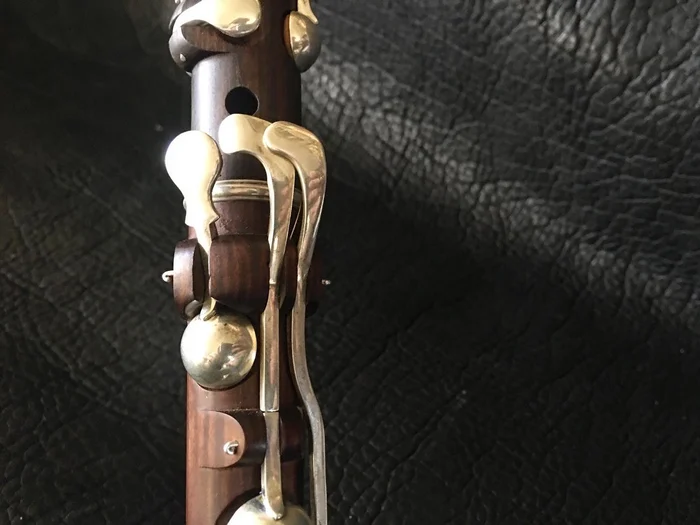
Close view of a blackwood flute with silver block-mounted keys on dark leather.
Silver keywork on blackwood.their photograph
Aaron Olwell standing outdoors in a yellow work jacket, holding a wooden flute.
Aaron Olwell — partner in the shop since 2006.their photograph
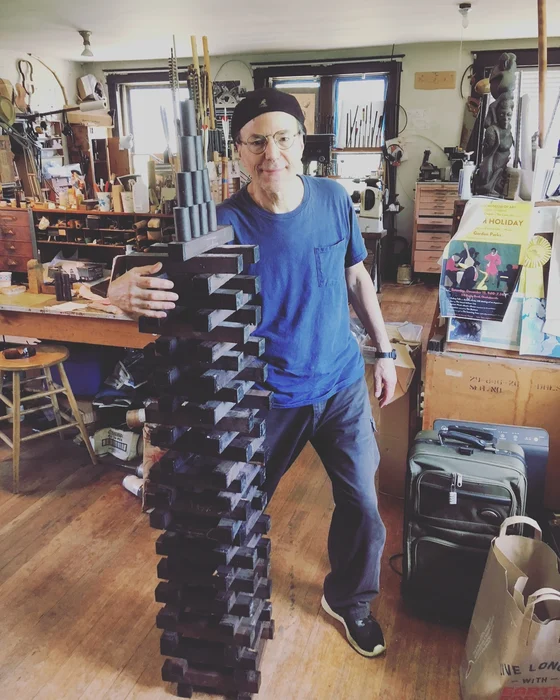
A maker in the workshop standing beside a tall stack of flute cases.
In the workshop, beside a stack of cases.their photograph
Two worn leather-bound ledgers stacked on a desk.
The ledgers, kept on paper.their photograph
04The line of itPawn shop to fellowship

Fifty years, and the craft is already handed on.

1971A wooden flute from a pawn shop — taken apart, understood.
1975Patrick begins making flutes, teaching himself by measurement and experiment.
2006Aaron Olwell — grown up in the workshop, apprenticed, master craftsman — becomes his father’s partner. He makes his own instruments “from log to flute.”
2013The documentary “The Keymaster” is made about the shop.
2026The NEA National Heritage Fellowship. Journeymen Seth Swingle and Matthew Olwell are already at the benches, so the taper does not stop here.
05Reaching the shopVirginia & Georgia

Through the workshop’s own page.

The shop publishes no telephone or street address — enquiries go through the contact page at olwellflutes.com. This redesign has not invented what they chose not to print. Their site also keeps a page on African blackwood conservation, which is worth reading before ordering in that wood.