He measured hundreds of flutes to make one.
Patrick Olwell taught himself flutemaking by measuring hundreds of 19th-century simple-system flutes — then drew designs that play more easily, answer faster and sit better in tune than most of the instruments they descend from. This year the National Endowment for the Arts named him a National Heritage Fellow, the country’s highest honour in the folk and traditional arts.

The whole instrument is a taper you cannot see.
A modern orchestral flute is cylindrical. These are not: the bore narrows from the head down to the foot, the way French and English makers cut it before the Boehm system swept the concert hall. That cone is the entire secret of the sound — and it is drawn in the left margin of this page, head at the top, six holes in the body. As you read, the air column moves down the bore, and each hole it passes opens.
In their own words: the flutes are carefully made one at a time, using precision hand tools and old-school craftsmanship.

The first chairs of a tradition.
His flutes are now widely recognized as benchmarks for contemporary wooden flute craftsmanship.
National Endowment for the Arts, 2026 citation
The NEA’s account begins in a pawn shop: a wooden flute bought in 1971, taken apart, understood. A workshop followed in 1975. The fellowship, announced this year, put him beside the musicians who play his instruments — Mike Rafferty received the same honour in 2010.
Blackwood and boxwood, silver when it is wanted.
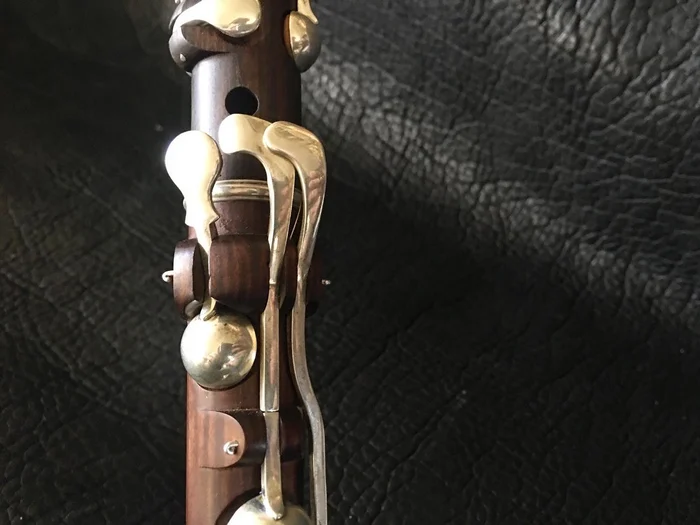

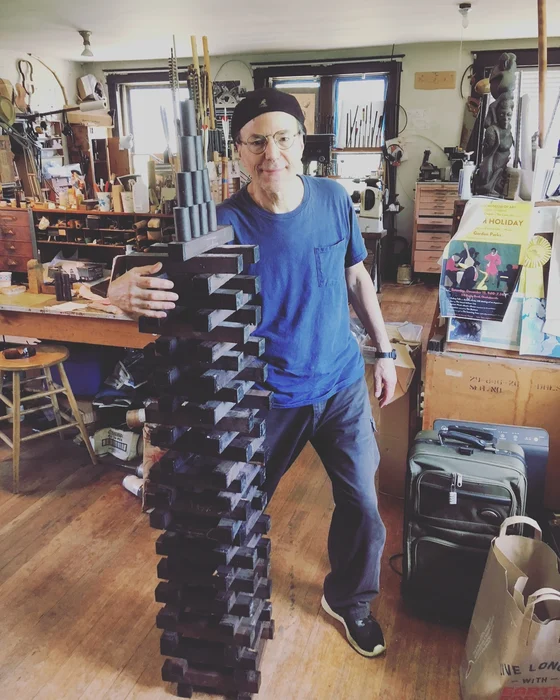

Fifty years, and the craft is already handed on.
Through the workshop’s own page.
The shop publishes no telephone or street address — enquiries go through the contact page at olwellflutes.com. This redesign has not invented what they chose not to print. Their site also keeps a page on African blackwood conservation, which is worth reading before ordering in that wood.